


Article: From Deficit to Dignity? Young People with Disabilities Negotiating Ableism, Emotional Labour and Resistance
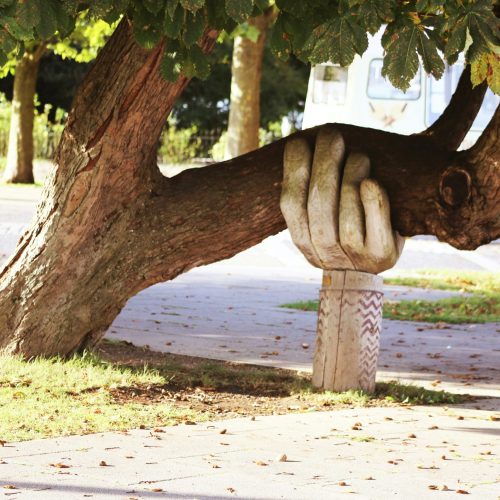
In this article, Jen Couch, Tim Moore and Vicky Saunders outline their qualitative research with young people with disabilities. They explore the young people’s experiences of everyday ableism, the impacts on them including the substantial emotional labour it creates, and their responses and resistance to ableist and deficit discourses about them. The authors argue that, while young people are presenting an effective challenge to these discourses in their everyday lives, structural issues need to be addressed to support reframing of these discourses in policy and practice. They emphasise the importance of young people with disabilities being fully heard and involved in the development of policy and practice about them.
Disability remains one of the most persistent sites of social exclusion globally. Despite decades of advocacy, legal reform, and policy intervention, people with disability continue to encounter structural barriers to education, employment, and community participation (Goodley, 2017; Shakespeare, 2018). In Australia, initiatives such as the National Disability Insurance Scheme (NDIS) and anti-discrimination legislation have sought to improve inclusion; however, public attitudes continue to shape everyday experiences of belonging and exclusion (Calder-Dawe et al., 2020; Krueger-Henney, 2019). These attitudes are not simply individual beliefs but are structured through ableism, norms that privilege independence, productivity, and bodily ‘normalcy’ with significant consequences for how people with disability are perceived and treated (Campbell, 2017; Goodley et al., 2019).
Young people occupy a critical position within these dynamics. As both recipients and producers of social norms, their attitudes are shaped by family, education, peer cultures, media, and broader social contexts (Brady et al., 2023; Slothouber et al., 2025). While a substantial body of research has examined attitudes toward disability, comparatively less attention has been paid to how young people themselves interpret these attitudes (Buchner, 2015; Brady et al., 2023), how they experience them in everyday life, and how they respond to or resist them. Even less research centres the voices of young people with disabilities, despite growing recognition of their rights to participation and self-representation (Jóhannsdóttir et al., 2022).
Drawing on critical disability studies and youth studies (Slater, 2015; Goodley et al., 2019), this article conceptualises disability as socially and relationally produced through everyday interactions, institutional practices, and cultural narratives. Rather than treating attitudes as fixed, the analysis explores how they are learned, reproduced, negotiated, and contested (Buchner, 2015). Based on focus groups with 39 young Australians, the paper centres the perspectives of young people with disabilities as critical to understanding how these processes unfold (Liddiard, 2018; Slothouber et al., 2025).
The analysis is structured around three interconnected themes: everyday ableism and deficit‑based understandings of disability; the emotional labour and impacts of negotiating stigma; and the ways young people actively resist and reframe dominant narratives through disability pride and identity.
Methods
This study employed a qualitative design using five focus groups with 39 young people aged 15–24. Participants included young people with disabilities, non-disabled peers, young carers, and young people from culturally and linguistically diverse backgrounds. Intersectionality across these categories was common, reflecting the complexity of young people’s lived experiences (Slothouber et al., 2025).
Focus groups were conducted between 2024 and 2025, each comprising 6–8 participants and lasting between 1.5 and 2 hours. A semi-structured guide explored understandings of disability, perceived societal attitudes, influences on those attitudes, and their impacts on education, employment, and social life. Accessible participation methods were used, including support workers and alternative communication options.
Data were transcribed and analysed thematically using an inductive approach (Braun & Clarke, 2006). Coding was conducted collaboratively to ensure rigour, with themes refined through iterative discussion. The analysis draws on perspectives across the participant group, while foregrounding the experiences of young people with disabilities. Insights from other participants are included where they extend or provide additional context to these accounts. As the analysis centres these perspectives, quotes presented below are drawn primarily from young people with disability unless otherwise stated.
Findings
Across the data, ableism emerges as an everyday social process, shaping assumptions, interactions, and expectations in ways that position disability as deficit. As one participant summarised, dominant societal assumptions position disability as “Poor quality of life; dependent on others; would be better if cured; can’t work… can’t be seen.”
Everyday Ableism and Deficit-Based Understandings
Participants described a pervasive deficit framing of disability, often understood as tragedy, limitation, or something to be fixed. These assumptions shaped interactions across schools, workplaces, and public spaces, and were frequently deeply ingrained, influencing behaviour even when unrecognised. As participants noted, “there is a lot of judgement that stems from stereotypes,” which can “lead to people dehumanising disabled people or simply treating them badly,” while others reflected that such stereotypes shape “people’s really ingrained values… whether they know it or not.”
These deficit framings were also tied to assumptions about desirability and normalcy. As one young person explained, there is a widespread belief “that disabled people don’t want to be disabled, and that we would erase our disability if we could.” Such views position disability as inherently negative and reinforce expectations of cure, correction, or disappearance.
These assumptions were closely linked to broader societal expectations of productivity and independence. Participants described being judged against normative standards of ability, with those perceived as unable to meet these standards viewed as less valuable.
…capitalism creates associations between physical capacity and worth… if someone is seen as unable to participate, they’re considered less.
Infantilisation was a particularly common experience, with participants describing being spoken to as children, ignored in conversations, or having others speak on their behalf. As one participant reflected, “I will be very infantilised and treated like I can’t do anything, or like I can’t want the same things my peers want.”
For those with invisible disabilities, legitimacy was frequently contested. Participants described being disbelieved, denied support, or accused of exaggeration, captured in the blunt assessment that “if people can’t see it, they don’t believe it.” Others recounted more overt challenges, noting that “if you’re young and you’re not visibly disabled, you’re making it up… and you get yelled at for that by random people.”
These accounts illustrate how ableism operates not only through overt discrimination but through subtle, everyday interactions that undermine autonomy and reinforce exclusion. Importantly, these assumptions were not neutral but embedded within broader social and economic values. As one participant observed, “capitalism creates associations between physical capacity and worth… if someone is seen as unable to participate, they’re considered less.”
The Impacts of Ableism: Emotional Labour, Mental Health and Participation
A central theme across participants’ accounts was the emotional labour required to navigate ableism. Young people described the ongoing effort involved in explaining their needs, correcting misconceptions, and managing others’ reactions—an effort that, as one participant put it, leaves them feeling “tired… [like] I start every interaction at an immediate disadvantage.” Others described the constant need to disclose and justify their needs, noting “I have to say it straight away… and people ask invasive questions… it gets tiring,” while even routine activities required additional effort, with participants reflecting that “anytime I want to go somewhere, I have to put in more planning… being disabled creates a lot of extra work.”
In this sense, emotional labour was not incidental but a constant condition of participation, shaping how young people navigate everyday interactions. This labour was described as cumulative and exhausting, contributing to stress, anxiety, and diminished self-esteem. Participants spoke of being questioned, pitied, or compared to stereotypes, and of feeling ongoing pressure to justify their experiences, captured in the reflection that “your personhood is constantly being questioned… it’s so draining.” For some, this resulted in avoiding supports or accommodations due to fear of judgement.
The impact on mental health was significant, with participants describing experiences of anxiety, isolation, and depression linked to stigma and exclusion. In some cases, bullying and harassment escalated to severe distress, including suicidal ideation.
Ableist attitudes also had material consequences across key life domains. In education, participants described inconsistent support, low expectations, and failures to address bullying, noting that “some teachers were very inclusive… whereas others weren’t.” In employment, stereotypes about incapacity limited opportunities, with employers often focusing on perceived limitations rather than potential. Social participation was similarly constrained, with participants describing exclusion from friendships, relationships, and community spaces.
Taken together, these accounts demonstrate that ableism is not only attitudinal but structural, shaping access to opportunities while simultaneously producing ongoing emotional and psychological burdens.
Negotiating, Resisting and Reframing Disability
Despite these challenges, young people with disabilities were not passive recipients of ableist attitudes. Rather, their accounts reveal ongoing processes of negotiation, in which dominant deficit-based understandings are both taken up and actively resisted. Central to this was the development of disability pride, not simply as self-acceptance, but as a deliberate rejection of narratives that position disability as tragedy or lack. As one participant explained, “disability pride has been a really big part of feeling good about myself… not trying to deny my disability,” highlighting how identity work becomes a way of reasserting value in the face of stigma.
Importantly, these accounts challenge individualised framings of resilience. While participants recognised strength and growth in their experiences, they were also critical of how such narratives are taken up within broader society. In particular, so-called “inspiration” discourses were understood as a form of deflection, where recognition replaces responsibility. As one young person observed, “people call us inspiring, so they don’t have to deal with the fact they’re being ableist.” In this way, positive framings of disability can reproduce, rather than disrupt, existing inequalities by obscuring the structural conditions that produce exclusion.
At the same time, participants described the complexity of navigating these competing narratives in everyday life. Some spoke of internalising dominant assumptions, particularly in relation to legitimacy, capability, and worth, while others described actively pushing back, asserting independence, and redefining what participation looks like on their own terms. These responses were not fixed but shifting, shaped by context, relationships, and experience.
What emerges is a view of disability identity as dynamic and relational. Rather than a simple movement from stigma to empowerment, young people move between accommodation, resistance, and redefinition, negotiating their identities within the constraints of ableist social norms. This underscores that resistance is not located outside of power but is shaped through ongoing engagement with it.
Discussion
These findings highlight the importance of understanding ableism as a relational and interactional process, rather than solely as an individual attitude or structural condition. Young people’s accounts demonstrate that ableism is enacted in everyday encounters, through language, assumptions, and behaviours that position disability as lesser, burdensome, or in need of validation. These interactions accumulate over time, shaping not only access to opportunities but also how young people understand themselves and their place within social worlds (Campbell, 2017; Calder‑Dawe et al., 2020; Goodley et al., 2019).
In particular, the accounts of young people with invisible disabilities reveal how legitimacy is socially negotiated. The need to repeatedly prove or explain one’s disability reflects a “politics of recognition,” where access to support is contingent on being seen, believed, and categorised in ways that align with dominant expectations (Jóhannsdóttir et al., 2022; Slothouber et al., 2025). This places an additional burden on young people, requiring them to manage disclosure strategically while navigating the risk of disbelief, stigma or moral judgement (Calder‑Dawe et al., 2020; Santuzzi et al., 2018).
The findings also point to the limits of awareness‑based approaches to inclusion. While increased visibility and representation are often positioned as solutions to stigma, participants’ experiences suggest that visibility alone does not disrupt deeply embedded assumptions about capacity, productivity, and independence. Without challenging the normative values underpinning ableism, such approaches risk reproducing deficit framings rather than transforming them (Campbell, 2017; Goodley, 2017; Goodley et al., 2019).
Importantly, the prominence of disability pride signals a shift toward more politicised understandings of disability among young people. Pride was not simply about self‑acceptance, but about rejecting deficit framings and asserting disability as a valid and valued identity. This aligns with broader disability scholarship that positions identity, culture, and community as central to resistance, collective meaning‑making, and the re‑imagining of participation beyond ableist norms (Liddiard, 2018; Slothouber et al., 2025).
Implications for Practice and Policy
The findings have important implications for policy, education, and youth work practice. First, they highlight the need to move beyond generic “disability awareness” initiatives toward approaches that explicitly address ableism, including the subtle and everyday interactions through which it is reproduced. Research with young people demonstrates that awareness‑based approaches often fail to challenge underlying assumptions about normalcy, productivity, and worth, and may leave deficit framings intact (Calder‑Dawe et al., 2020; Krueger-Henney, 2019). In educational settings, this includes equipping teachers to challenge low expectations, respond effectively to disability‑based bullying, and model inclusive practices that recognise young people with disabilities as capable and autonomous (Brady et al., 2023).
Second, the significance of emotional labour suggests a need for systems that reduce the burden placed on young people to continually explain and justify their needs. Studies of everyday ableism show that repeated disclosure, justification, and negotiation, particularly for those with invisible disabilities, constitute a substantial and ongoing form of labour that negatively affects wellbeing and participation (Calder‑Dawe et al., 2020; Jóhannsdóttir et al., 2022). More responsive and flexible support systems are therefore required, particularly in education and service settings, to reduce reliance on individual advocacy and credibility‑testing as conditions of access.
Finally, the findings point to the value of youth‑led and co‑designed approaches. Supporting young people with disabilities to take on leadership roles in advocacy, program design, and public discourse can shift dominant narratives from pity and deficit toward respect, agency, and expertise. Emerging research with disabled youth highlights how co‑design and leadership opportunities enable young people to contest ableist assumptions while ensuring that policies and practices are grounded in lived experience and intersectional realities (Brady et al., 2023; Slothouber et al., 2025).
Conclusion
This study highlights the complex and often contradictory landscape of disability for young Australians. While deficit-based understandings remain pervasive, young people with disabilities are actively resisting these narratives and asserting alternative understandings grounded in pride, identity, and agency.
By centring their voices, this paper demonstrates that ableism operates not only through structural barriers but through everyday interactions that shape how young people understand themselves and their place in the world. It also highlights the significant emotional labour involved in navigating these dynamics.
Creating more inclusive societies requires moving beyond awareness-raising toward structural and cultural change. This includes challenging deficit-based assumptions, embedding accessibility and co-design, and supporting the development of positive disability identities.
These findings suggest that generational shifts may be underway, with young people actively challenging inherited assumptions about disability. However, without structural change, these shifts remain uneven and fragile.
Young people with disabilities are not passive recipients of policy or practice but active agents with critical insights into how inclusion can be realised. Their perspectives are essential to building more equitable and inclusive futures.
Youth & Policy is run voluntarily on a non-profit basis. If you would like to support our work, you can donate any amount using the button below.
Last Updated: 20 June 2026
References:
Brady, G., Franklin, A., & RIP:STARS Collective. (2023). ‘I am more than just my label’: Rights, fights, validation and negotiation: Exploring theoretical debates on childhood disability with disabled young people. Sociology of Health & Illness, 45(6), 1376–1392. https://doi.org/10.1111/1467-9566.13678
Braun, V., & Clarke, V. (2006). Using thematic analysis in psychology. Qualitative Research in Psychology, 3(2), 77–101. https://doi.org/10.1191/1478088706qp063oa
Buchner, T. (2015). Mediating ableism: Border work and resistance in the biographical narratives of young disabled people. Zeitschrift für Inklusion, 9(2). https://www.inklusion-online.net/index.php/inklusion-online/article/view/272/255
Calder-Dawe, O., Witten, K., & Carroll, P. (2020). Being the body in question: Young people’s accounts of everyday ableism, visibility and disability. Disability & Society, 35(1), 132–155. https://doi.org/10.1080/09687599.2019.1621742
Campbell, F. K. (2009). Contours of ableism: The production of disability and abledness. Basingstoke, UK: Palgrave Macmillan.
Goodley, D. (2024). Disability studies: An interdisciplinary introduction (3rd ed.). London, UK: SAGE.
Goodley, D., Lawthom, R., Liddiard, K., & Runswick-Cole, K. (2019). Provocations for critical disability studies. Disability & Society, 34(6), 972–997. https://doi.org/10.1080/09687599.2019.1566889
Jóhannsdóttir, Á., Egilson, S. Þ., & Haraldsdóttir, F. (2022). Implications of internalised ableism for the health and wellbeing of disabled young people. Sociology of Health & Illness, 44(3), 360–376. https://doi.org/10.1111/1467-9566.13425
Krueger-Henney, P. (2019). Through space into the flesh: Mapping inscriptions of anti-Black racist and ableist schooling on young people’s bodies. Curriculum Inquiry, 49(4), 426–441. https://www.jstor.org/stable/48538512
Liddiard, K. (2018). The intimate lives of disabled people. London, UK: Routledge.
Shakespeare, T. (2018). Disability: The basics. London, UK: Routledge.
Santuzzi, A. M., Waltz, P. R., Finkelstein, L. M., & Rupp, D. E. (2014). Invisible disabilities: Unique challenges for employees and organizations. Industrial and Organizational Psychology, 7(2), 204–219. https://doi.org/10.1111/iops.12134
Slater, J. (2015). Youth and disability: A challenge to Mr Reasonable. London, UK: Routledge.
Slothouber, V., & Lindsay, S. (2025). Identity negotiations of multiply marginalized disabled youth. Disability & Society, 40(11), 3104–3128. https://doi.org/10.1080/09687599.2025.2458011
Biography:
Dr Jen Couch is Senior Lecturer in Youth Work and International Development at Australian Catholic University. Her professional background is in international community development and youth work, with extensive experience working alongside displaced and marginalised communities, particularly in refugee contexts and South Asia. Her research focuses on social resilience, marginalisation, and the lived experiences of young people, and is grounded in participatory and co-designed approaches with young people. She has published widely on refugee young people, homelessness, and social exclusion, and is recognised for her sustained contribution to research in this area. Her work also includes research and teaching on the Thai–Burma border, examining education, youth work practice, and critical pedagogy in contexts of displacement. Her recent work examines the experiences of young refugee people during COVID-19. More recently, her research has focused on disability, safeguarding young people, and strengthening inclusive and protective practices across youth and community settings.
Dr Vicky Saunders is a Senior Research Fellow at the Institute of Child Protection Studies, Australian Catholic University. Her research focuses on children’s rights, safety and wellbeing, with particular expertise in participatory and child-centred methods. Vicky has led and contributed to studies with children, families and practitioners across child protection, domestic and family violence, safeguarding and disability-inclusive practice. Her work is grounded in a commitment to ethical, accessible research that supports children and young people, including those with disability, to have their views heard and acted upon in policy and practice.
Associate Professor Tim Moore is Deputy Director at the Institute of Child Protection Studies. He is an internationally recognised child and youth researcher and children’s rights advocate. His research spans two decades, addressing homelessness, youth justice, child protection, residential care, young carers, and child sexual abuse prevention. Tim has advised multiple inquiries and commissions, including the national Royal Commission into Institutional Responses to Child Sexual Abuse. He leads the Institute’s child-inclusive research and practice work, strengthening services and systems to be more responsive to the needs and expectations of children and young people.