


Article: The Impact of Young People’s Participation on Local Government Decision-Making in England
In this article Josh Harsant examines how young people’s participation shapes local government decision-making in England, drawing on qualitative case studies across four London boroughs. The research explores under what conditions youth voice turns into impact, and what that impact is. The article presents a framework for understanding impactful youth participation.
Introduction
The participation of children and young people in public decision-making has been increasingly centred in both practice and research. Across youth studies, childhood studies, and social policy literature, participation is commonly framed as both a democratic right and an instrumental mechanism for improving the quality, legitimacy, and responsiveness of decisions affecting young people’s lives (see Farthing, 2012; McNeish & Newman, 2002; Shukra et al., 2012; Tisdall et al., 2008). These ideas are rooted most visibly in Article 12 of the 1989 United Nations Convention on the Rights of the Child (UNCRC), which affirms children’s right to express views in matters affecting them and to have those views given due weight.
In the UK, this rights-based commitment has been reflected in successive waves of policy rhetoric and statutory guidance, particularly within education, social care, and youth policy. Local authorities have been encouraged, and in some cases required, to create opportunities for young people to participate in decision-making processes. Yet despite this apparent institutionalisation of participation, concerns persist regarding its substantive impact. Participation is frequently evaluated according to its form or quality rather than its influence on decisions, policies, or organisational practices (see Adu-Gyamfi, 2013; Crowley, 2015; Kirby, 2002; Tisdall & Davis, 2004).
This article – based on my recent PhD (Harsant, 2025) – examines how young people’s participation operates within local government decision-making and under what conditions it results in forms of impact. It responds to calls within youth and childhood studies to move beyond descriptive participation frameworks and to interrogate participation as a relational and institutional practice shaped by power, governance, and organisational culture. At the same time, it contributes to local government research and practice by examining youth participation not as a peripheral engagement activity, but as a governance practice embedded within constrained decision-making environments.
Drawing on empirical research with four London borough councils, this article asks: how does young people’s participation have an impact on local government decision-making? In answering this question, it advances a process-oriented understanding of impact and proposes a framework to inform both research and practice. To start, it is first necessary to clarify what is meant by participation and how existing scholarship has conceptualised its purpose and limitations
Conceptualising participation
Children and young people’s participation has been variously defined across disciplines, but is commonly understood as processes through which children and young people express views and influence decisions affecting their lives, either individually or collectively. Early ideas position participation as a cornerstone of democratic citizenship, as can be seen in Hart’s (1992) seminal Ladder of Participation. Subsequent works have expanded this framing to include a wide range of participatory practices across institutional and everyday contexts.
Over time, however, participation discourse has increasingly foregrounded the notion of ‘voice’. Encouraging children’s voices has been central to challenging paternalistic models of childhood and asserting children’s status as social actors. Yet the metaphor of voice has been subject to sustained critique (see Percy-Smith, 2018; Tisdall, 2017; Walther et al., 2020). Scholars have argued that voice-centred approaches risk prioritising expression over influence, obscuring the responsibilities of adults and institutions to listen, respond, and act. Moreover, privileging verbal expression can marginalise children who communicate differently, while collective notions of ‘voice’ risk flattening diverse experiences and interests (see James, 2007; Jones & Welch, 2018; Lundy, 2007; 2018).
This critique is central to the study because it highlights a persistent gap in participation research: while much attention has been given to enabling expression, far less has been paid to whether and how such expression translates into influence within institutional decision-making processes. Indeed, some scholars have advocated shifting analytical attention towards influence and, indeed, impact. Despite its intuitive appeal, impact remains under-theorised and under-examined empirically, particularly within local government contexts. Where impact is discussed, it is often conflated with individual developmental outcomes for participating young people rather than changes to decision-making processes or outcomes (see Chawla, 2001; Kirby, 2002; Sinclair, 2004).
This study conceptualises impact as the ways in which young people’s participation shapes actions, priorities, behaviours, or decisions within local government. This includes both direct and indirect impact, immediate and cumulative outcomes, and formal and informal changes. Understanding participation as relational and context-dependent raises important questions about the institutional settings in which it occurs. Local government provides a particularly revealing case, given its complex governance structures and statutory responsibilities.
The context of local government
Local government represents a particularly complex and under-examined site for youth participation. English local authorities operate within tightly regulated decision-making frameworks shaped by statutory duties, political accountability, and financial constraints. While councils are expected to consult residents and demonstrate public engagement, opportunities for shared decision-making are limited by formal governance structures (see Burall & Carr-West, 2009; Lowndes et al., 2001).
Youth participation within local government has most commonly taken the form of representative mechanisms such as youth councils, forums, parliaments, and young mayor schemes (Atkin & Peck, 2010; BYC, 2017). These initiatives often mirror adult democratic institutions, reflecting assumptions that participation should socialise young people into existing systems for political and democratic engagement. Such models can offer access to decision-makers and symbolic recognition, but have been criticised for reproducing power hierarchies, privileging already-engaged young people, and limiting opportunities for substantive influence
Despite the widespread adoption of these mechanisms, empirical research examining their impact on local government decision-making remains sparse. Evaluations have tended to focus on participation quality, representation, or individual outcomes (see Burke, 2010; Cutler, 2003; Day et al., 2015; Kirby, 2002; Lansdown, 2011) rather than examining whether and how young people’s contributions shape decisions, policies, or organisational practices. To explore these dynamics empirically, the study adopted a qualitative multiple case study design, enabling a detailed examination of participation practices across different local authority contexts
Methodology
The study employed a qualitative multiple case study design to explore how youth participation operates across different local government contexts. Four participatory mechanisms were selected across London borough councils: an elected youth council, a non-elected youth council, a young mayor and (volunteer) young advisors programme, and a (remunerated) young advisors project. Participants included young people, as well as adults – both participation workers and decision-makers at officer (employee) and member (politician) level.
Data collection involved three methods. First, semi-structured workshops were conducted with young people participating in each mechanism. These workshops provided collective spaces for reflection on experiences of participation, understandings of impact, and perceptions of influence and impact. Second, semi-structured interviews were conducted with participation workers and local authority decision-makers to explore organisational perspectives on participation and its role within decision-making processes. Third, a small number of relevant documents were examined to contextualise participation practices.
The data was then analysed inductively using a thematic approach informed by grounded theory principles. Analysis focused on identifying patterns in understandings of impact, conditions shaping participation’s effectiveness, and cross-cutting challenges and opportunities. Ethical considerations through the methodology included informed consent, safeguarding, confidentiality, and reflexivity regarding adult–child power dynamics.
Understanding impact
Participants articulated impact in primarily three overlapping ways.
The first understanding of impact centred on influencing individual behaviour or action, particularly among councillors and senior officers. Young people described impact occurring when decision-makers reconsidered assumptions, altered priorities, or took action in response to young people’s input. For adults, such impact was often understood as incremental shifts in thinking rather than immediate policy change.
A second understanding of impact related to embedding young people’s participation within routine decision-making processes. From this perspective, impact was associated with the normalisation of young people’s input through regular engagement, ongoing roles, and institutionalised feedback mechanisms. Rather than discrete outcomes, impact was seen as cumulative and relational, developing over time through sustained engagement.
Third, impact was understood as raising awareness of issues affecting young people within the local authority and wider community. Activities such as campaigns, presentations, and public events were valued for amplifying young people’s perspectives, even when direct decision-making influence was limited. While awareness-raising was sometimes viewed as a precursor to change, young people also expressed frustration when increased visibility did not translate into action.
These understandings reveal a broad conception of impact that extends beyond formal decision-making outcomes. At the same time, they expose tensions between symbolic recognition and substantive influence, highlighting the importance of examining how impact is enacted and experienced in practice. This prompts a further question: under what conditions does participation translate into the forms of impact identified by participants?
Conditions for delivering impact
The study revealed six interrelated conditions that shape whether participation resulted in the impact as identified.
The first was buy-in and commitment from decision-makers, participation workers, and young people themselves. Where decision-makers visibly supported youth participation, young people’s contributions were more likely to be taken seriously. Conversely, limited buy-in often resulted in participation being marginalised or treated as optional. The second condition concerned the negotiation of agendas. Impact was enhanced when young people had opportunities to shape priorities and define issues of concern. However, agenda-setting was frequently constrained by organisational priorities, political considerations, and adult assumptions about what was appropriate or feasible.
Third, knowledge and skills were central. Young people required support to understand local government processes and decision-making cycles, while decision-makers needed skills to engage meaningfully with young people’s perspectives. Where mutual learning occurred, participation was more impactful. Fourth, adults’ roles played a critical mediating function. Participation workers acted as brokers, translators, and advocates (see also Harsant, 2025b), while decision-makers’ openness to challenge influenced outcomes. Adult gatekeeping was found to both enable and constrain impact.
Fifth, the availability of meaningful opportunities shaped participation’s effectiveness. Sustained engagement embedded within decision-making cycles was more impactful than one-off consultations. Finally, recognition and remuneration influenced young people’s sense of value and legitimacy, signalling that their contributions were taken seriously – although, this was not necessarily considered to be a ‘deal-breaker’.
Taken together, these conditions illustrate that impact is not an automatic outcome of youth participation but is contingent on how participation is structured, supported, and situated within local government decision-making. In turn, this underscores the importance of understanding youth participation as a dynamic and mediated process, shaped by institutional contexts and adult practices, rather than as a standalone mechanism for influence.
Challenges and opportunities for strengthening impact
The study also surfaced several cross-cutting challenges and opportunities for strengthening the impact of youth participation on local government decision-making. ‘Routes to impact’ varied between peer-to-peer influence and direct engagement with decision-makers, each offering distinct possibilities. Peer-to-peer approaches were particularly striking in the study, wherein young people take on leadership roles focussed on spreading learning, building capacity and inspiring action among other young people (see Percy-Smith & Burns, 2013). The scope, scale, and depth of impact were often shaped by institutional context, with deeper impact often requiring long-term engagement and a more defined scope and more limited scale.
Feedback emerged as a persistent challenge, but nevertheless an imperative. Where young people received clear feedback on how their input was used, trust and motivation were strengthened. The absence of feedback undermined perceptions of impact and credibility. Participants also reflected critically on participation terminology. Concepts such as co-production and youth-led participation were valued for emphasising collaboration and agency, but risked obscuring power imbalances if adopted uncritically and illegitimately.
A framework for understanding impactful youth participation
The findings challenge participation frameworks that prioritise form over function, and indeed impact, by demonstrating how the effects of participation are shaped by the ways it is enacted within specific institutional contexts. Rather than asking whether participation meets predefined criteria, this study shows that impact emerges through relational processes, the negotiation of power, and organisational cultures that enable or constrain young people’s influence.
These empirical insights directly informed the development of a framework for impactful youth participation (Figure 1). The framework synthesises seven interrelated components (summarised in Table 1), each grounded in the study’s findings, and offers a conceptual contribution to participation literature by shifting attention from normative models of ‘good participation’ towards a context-sensitive understanding of how participation produces impact in practice.
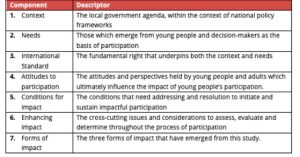
Table 1 – Summary of framework components
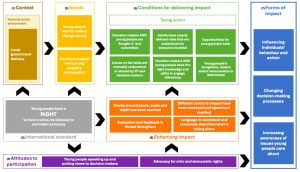
Figure 1 Framework for understanding impactful youth participation
Conclusion
This article has examined how young people’s participation influences local government decision-making, drawing on qualitative case studies across London boroughs. It set out to answer the question: how does young people’s participation have an impact on local government decision-making? The findings indicate that impact is understood in three main ways: influencing individual behaviour and action, embedding participation within routine decision-making processes, and raising awareness of issues affecting young people. These forms of impact are contingent on six interrelated conditions, including buy-in from decision-makers, agenda negotiation, mutual learning, adult roles, meaningful opportunities, and recognition.
Taken together, these conditions constitute a process-oriented framework for understanding and assessing the impact of youth participation. Rather than locating impact in particular participatory structures or models, the framework highlights how impact is produced through relationships, institutional practices, and ongoing negotiation between young people and adults. This shifts analytical attention from whether participation takes place to how it is embedded, supported, and acted upon within local government contexts.
The article contributes to youth and childhood studies by complicating narratives of voice and agency, demonstrating that young people’s influence is mediated through adult responsiveness and institutional arrangements. For local government research, it advances understanding of citizen engagement by specifying the mechanisms through which participation shapes decision-making.
For policy-makers and practitioners, the findings provide practical guidance for designing and sustaining participatory initiatives. They underline the importance of investing in relational work, creating clear feedback loops, clarifying adult roles, and securing organisational commitment if participation is to result in meaningful influence rather than symbolic inclusion. In doing so, the article offers a grounded framework that can inform both future research and evaluation, as well as practice, in youth participation initiatives.
Youth & Policy is run voluntarily on a non-profit basis. If you would like to support our work, you can donate any amount using the button below.
Last Updated: 19 March 2026
References:
Adu-Gyamfi, J. (2013). Can children and young people be empowered in participatory initiatives?: Perspectives from young people’s participation in policy formulation and implementation in Ghana. Children and Youth Services Review, 35(10), 1766-1772. https://doi.org/10.1016/j.childyouth.2013.08.003
Atkin, L., & Peck, N. (2010). Valuing young voices, strengthening democracy: the contribution made by youth engagement. Local Government Group with National Youth Agency. https://www.local.gov.uk/sites/default/files/documents/valuing-young-voices-stre- 563.pdf
British Youth Council [BYC]. (2017). Youth Voice Self-assessment and Snapshot Report. https://www.byc.org.uk/wp-content/uploads/2018/03/2017-Youth-Voice-Self- Assessment-and-Snapsot-Report.pdf
Burall, S., & Carr-West, J. (2009). Citizen power in recession? The case for public engagement in local government. Involve and the Local Government Information Unit. https://www.involve.org.uk/sites/default/files/field/attachemnt/Empowerment%20Econ omy%20Final%20Report2.pdf
Burke, T. (2010). Anyone listening? Evidence of children and young people’s participation in England. National Children’s Bureau [on behalf of Participation Works].
Chawla, L. (2001). Evaluating children’s participation: seeking areas of consensus. PLA Notes, 42, 9-13. https://pubs.iied.org/pdfs/G01959.pdf
Cockburn, T. (2013). Authors of their own lives? Children, Contracts, their Responsibilities, Rights and Citizenship. The International Journal of Children’s Rights, 21(2), 372-384. https://doi.org/10.1163/15718182-55680010
Crowley, A. (2015). Is Anyone Listening? The Impact of Children’s Participation on Public Policy. The International Journal of Children’s Rights, 23(3), 602-621. https://doi.org/10.1163/15718182-02303005
Cutler, D. (2003). Organisational Standards and Young People’s Participation in Public Decision- Making. Carnegie Young People Initiative.
Day, L., Percy-Smith, B., Ruxton, S., McKenna, K., Redgrave, K., Ronicle, J., & Young, T. (2015). Evaluation of legislation, policy and practice on child participation in the European Union (EU): Final Report. European Commission. https://op.europa.eu/en/publication- detail/-/publication/3f3c50b2-6a24-465e-b8d1-74dcac7f8c42
Farthing, R. (2012). Why Youth Participation? Some Justifications and Critiques of Youth Participation Using New Labour’s Youth Policies as a Case Study. Youth & Policy(109), 71-97. https://www.youthandpolicy.org/wp- content/uploads/2017/06/farthing_why_youth_participation.pdf
Harsant, J. (2025a). A critical inquiry into young people’s participation and its impact within local government decision-making. [Doctoral dissertation, University of Huddersfield]. University of Huddersfield Research Portal. https://pure.hud.ac.uk/files/113697312/24_Final_thesis.pdf
Harsant, J. (2025b). Realising the professional role of the youth participation worker. Youth & Policy. https://www.youthandpolicy.org/articles/youth-participation-worker/
Hart, R. (1992). Children’s Participation: From Tokenism to Citizenship. UNICEF International Child Development Centre. https://www.unicef- irc.org/publications/pdf/childrens_participation.pdf
Hartas, D., & Lindsay, G. (2011). Young people’s involvement in service evaluation and decision making. Emotional and Behavioural Difficulties, 16(2), 129-143. https://doi.org/10.1080/13632752.2011.569397
James, A. (2007). Giving Voice to Children’s Voices: Practices and Problems, Pitfalls and Potentials. American Anthropologist, 109(2), 261-272. https://doi.org/10.1525/aa.2007.109.2.261
Jones, P., & Welch, S. (2018). Rethinking Children’s Rights: Attitudes in Contemporary Society (2nd ed.). Bloomsbury.
Kirby, P. (2002). Measuring The Magic? Evaluating and researching young people’s participation in public decision making. Carnegie Young People Initiative.
Lansdown, G. (2011b). A framework for monitoring and evaluating children’s participation. A preparatory draft for piloting. Save The Children. https://resourcecentre.savethechildren.net/node/4733/pdf/4733.pdf
Lowndes, V., Pratchett, L., & Stoker, G. (2001). Trends In Public Participation: Part 1 – Local Government Perspectives. Public Administration, 79(1), 205-222. https://doi.org/10.1111/1467-9299.00253
Lundy, L. (2007). ‘Voice’ is not enough: conceptualising Article 12 of the United Nations Convention on the Rights of the Child. British Educational Research Journal, 33(6), 927- 942. https://doi.org/10.1080/01411920701657033
Lundy, L. (2018). In defence of tokenism? Implementing children’s right to participate in collective decision-making. Childhood, 25(3), 340-354. https://doi.org/10.1177/0907568218777292
Malone, K., & Hartung, C. (2010). Challenges of participatory practice with children. In B. Percy- Smith & N. Thomas (Eds.), A Handbook of Children and Young People’s Participation: Perspectives from theory and practice (pp. 24-38). Routledge.
McNeish, D., & Newman, T. (2002). Involving children and young people in decision-making. In D. McNeish, T. Newman, & H. Roberts (Eds.), What Works For Children? (pp. 186-204). Open University Press.
Percy-Smith, B. (2018). Participation as Learning for Change in Everyday Spaces. In C. Baraldi & T. Cockburn (Eds.), Theorising Childhood: Citizenship, Rights and Participation (pp. 159- 186). Palgrave Macmillan.
Percy-Smith, B., & Burns, D. (2013). Exploring the role of children and young people as agents of change in sustainable community development. Local Environment, 18(3), 323-339. https://doi.org/10.1080/13549839.2012.729565
Shukra, K., Ball, M., & Brown, K. (2012). Participation and Activism: Young people shaping their worlds. Youth & Policy(108), 36-54. https://www.youthandpolicy.org/wp- content/uploads/2017/06/shukta-yandp108.pdf
Sinclair, R. (2004). Participation in practice: making it meaningful, effective and sustainable. Children & Society, 18(2), 106-118. https://doi.org/10.1002/chi.817
Tisdall, E. K. M. (2017). Conceptualising children and young people’s participation: examining vulnerability, social accountability and co-production. The International Journal of Human Rights, 21(1), 59-75. https://doi.org/10.1080/13642987.2016.1248125
Tisdall, K. M., & Davis, J. (2004). Making a difference? Bringing children’s and young people’s views into policy-making. Children & Society, 18(2), 131-142. https://doi.org/10.1002/chi.816
Tisdall, K. M., Davis, J. M., & Gallagher, M. (2008). Reflecting on Children and Young People’s Participation in the UK. International Journal of Children’s Rights, 16, 343-354. https://doi.org/10.1163/157181808X311187
United Nations. (1989). Convention on the Rights of the Child. https://www.ohchr.org/EN/ProfessionalInterest/Pages/CRC.aspx
Walther, A., Pohl, A., Loncle, P., & Thomas, N. P. (2020). Researching youth participation – theoretical and methodological limitations of existing research and innovative perspectives. In A. Walther, J. Batsleer, P. Loncle, & A. Pohl (Eds.), Young People and the Struggle for Participation (pp. 15-33). Routledge.
Wyness, M. (2009). Children Representing Children: Participation and the problem of diversity in UK youth councils. Childhood, 16(4), 535-552. https://doi.org/10.1177/0907568209344274
Biography:
Dr Josh Harsant is an expert in youth voice and participation, with over two decades of lived, learned and professional experience in this field. His PhD, awarded in 2025, explored the impact of young people’s participation in local government decision-making. Josh is currently Head of Children and Young People’s Voice and Influence at Barnardo’s, the UK’s largest children’s health and social care charity.