


Article: The lasting impact of the pandemic on children and Child-first practice within a youth justice service
The pandemic shifted operational delivery across criminal justice services with greater use of remote delivery impacting upon relational practice. This research explored the lasting impact of the pandemic upon working practices, five years later, in a North-West youth justice service. The findings explore post-pandemic engagement within the youth justice service and reveal the lasting impacts of the pandemic in exacerbating vulnerability and mental health concerns of children.
Introduction
The youth justice system (herein YJS) works with children and young people (in this article, referred to as children) aged 10-18 years. This population are some of the most vulnerable within society with a range of interdependent and interrelated needs, including mental and physical health concerns, parenting or family behaviour, risk of serious harm and educational needs (Youth Justice Board, 2020). To best support this population who face a number of complex challenges, including being within the criminal justice system at a young age, the YJS takes a ‘Child-first’ approach. The Child-first approach seeks to reduce barriers faced by those within it, recognising their strengths and potential for positive future outcomes (Youth Justice Board, 2022). In practice, practitioners should treat them according to age and ability, working alongside them to overcome any barriers supporting children’s participation and social inclusion. Central to this, is the importance of supportive and trusted relationships being built between practitioner and children to empower children and develop their pro-social identity (Youth Justice Board, 2024).
The pandemic shifted operational delivery across criminal justice services with greater use of remote delivery impacting upon relational practice. Whilst all children were impacted by government guidelines with limited access to leisure and education, involvement within the YJS at this time was said to further exacerbate the needs of children within it (Smithson et al., 2022 see also Harris and Goodfellow, 2021; Hampson, Case and Little, 2022). Practitioner movement to statutory work within the YJS impacted upon preventative work, delays within the YJS and remote working could hinder safeguarding work, engagement and relationship building which was said to be harmful to children (Hampson, Case and Little, 2022). Further to such ‘pain’ of pandemic, there were some gains’ with some innovative practice positively received and continued (Hampson, Case and Little, 2022), as detailed in this article.
This research explored the lasting impact of the pandemic upon working practices, five years later, in a North-West youth justice service. The research received ethical approval from the University of Chester. The participants (n=5) were all youth justice practitioners (herein, practitioners) within the service recruited via a gatekeeper who shared an email to all staff members inviting them to participate[1]. A two-stage methodology was adopted; an initial online whiteboard tool, Padlet, was used to gather responses to the question ‘What impacts has the Covid-19 pandemic had upon operational practice and service delivery?’, followed by a focus group exploring responses to the Padlet. The data was analysed using thematic analysis. The data below is drawn from the focus group; participants are referred to with a code ‘SM’ for staff member and a number to ensure anonymity.
The findings explore post-pandemic engagement within the youth justice service and reveal the lasting impacts of the pandemic in exacerbating vulnerability and mental health concerns of children, supporting a wider literature base from (Smithson et al., 2022 see also Harris and Goodfellow, 2021; Hampson, Case and Little, 2022). Reviewing the lasting impacts of the pandemic upon youth justice services and the needs of children, the discussion calls for ongoing personalised responses to children to support pro-social development and positive futures. This article shows how a Youth Justice Service has taken learnings from the pandemic to develop relational based practice with children – a key aspect of youth work within the Child-first content.
Post-pandemic engagement within the youth justice service
During the pandemic, practitioners adopted different ways of working and some only had remote rather than face-to-face contact with children. Remote contact via telephone may have hindered the quality of relationships built (Hampson, Case and Little, 2022). A practitioner (P2) told us how they found phone/video calls ‘awkward’ and ‘strange’ with children ‘laughing’ and ‘acting silly’ on them. Owing to the differences, P1 had heard anecdotally, that some children had struggled post-pandemic. This was due to the change in expectations of longer appointments moving from 20-minute phone calls during the pandemic, to longer in person appointments at home or in the community including in council offices. Research by Gray et al., (2022) found mixed perspectives from children about remote contact during the pandemic. Some found it ‘easier’ with others stating it was ‘weird’ and ‘awkward’. Post-pandemic, most intervention work and contact with children had moved back to face-to-face except for some multi-agency meetings.
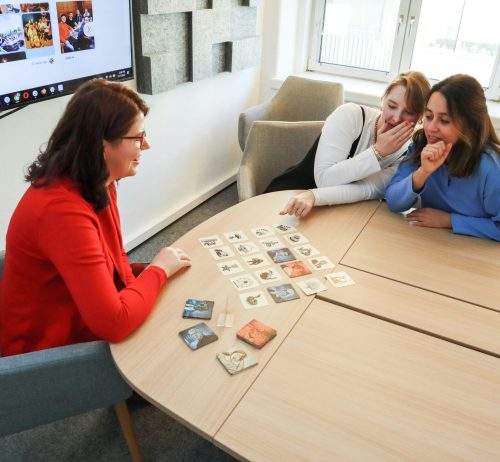
Whilst some of the physical spaces’ practitioners met with children (e.g., council offices) were not child-friendly, the practitioners we spoke with felt that face-to-face contact with children was easier for conversation. During the pandemic, practitioners were innovative in means of meeting with the children, on walks and on bike rides (see HMIP, 2020a as cited in Hampson, Case and Little, 2022) with outside spaces being perceived as ‘safer’ during the pandemic than indoors. New and innovative practices including ‘icebreakers’, ‘board and card games’, taking children to the gym, for a walk or a coffee (P4) engage children with positive activities in line with Child-first principles. Practitioners felt that the pandemic and adoption of the Child-first approach had shifted the perception that children should have appointments in offices, and as practitioners they had greater autonomy to build relationships and focus upon positive activities and aspects of children’s strengths:
There was a massive thing of us being in the office and young people being seen in offices, whereas I think [it’s] just a massive shift anyway with the whole Child-first principles anyway about being flexible, taking them for walk, going for coffee, you know, doing activities, whether that’s COVID had a bit of a push into that as well. P4
Beyond the pandemic, engagement with children continues to focus upon relationship building rather than offending focused activity in line with Child-first. P2 told us about a young female they had been working with for a few months who had been in care for a long period of time. The practitioner talked about a visit to the care home where care staff were present and the child invited the [female] practitioner to sit alongside her. The practitioner found that engaging the female about her interests was positive:
… I thought, how am I going to like crack this? […] I went on Wednesday. I’m thinking what work are we actually doing here? But then, as she was doing her eyelashes and was distracted, there was loads of photos on a wall, she’d had a bedroom re-done and I was like, wow, your bedroom looks dead good. And she told me all about family, and then it brought that … because obviously she doesn’t live with mum and dad now because she’s in care and she was telling me about … like, there was baby photos […] It really prompted that discussion and I come away thinking. I know more about her from just having a conversation. […] It was a really good visit, whereas previously I think, why haven’t I done that worksheet. Why haven’t I done that about offending behaviour? That’s why she’s with us. But actually, I’ve gained her trust. And it’s took. Five months? Nearly. But there’s no swearing anymore. P2
Relationship building is an integral part of youth justice practice and in the context of child-first (YJB, 2022) and within youth work more broadly children are encouraged to build other positive relationships for their social and community development (see Hennell, 2022). Informal conversations as above may not be easily ‘measured’ or accounted for in paperwork but can be transformative in relationship building as evidenced above. During the pandemic, practitioners experienced challenges in establishing and building relationships remotely and sought to employ innovative practices of engagement beyond offices that adhered with Child-first by focusing on children’s interests. Beyond the pandemic, continuing these approaches has led to continued supportive relationships between children and practitioners.
Impacts of the pandemic upon children
The practitioners were keenly aware of the ‘disproportionate’ (Bareman, 2020) and detrimental impact the pandemic had upon those within the service. Participants felt that this had had the ‘biggest’ impact (P5) upon children as many missed ‘key developmental stages’ and transitions between primary to secondary school and secondary school to college (P3):
…But if that was completely disrupted, then attitudes towards education have been completely disrupted. So, I noticed that a lot when I look at those age groups, [I] mainly look at what COVID did, like impacted their attitude towards school, obviously going from some kids were allowed to go into school, some had to do online tutoring, and they just didn’t do it. So, I’d sort of look at what that impacted and build my help around that, even though it’s a few years on, I try and consider how COVID impacted their behaviours and everything around education and employment. P3
Children within youth justice services were not prioritised under the Department for Education definitions of vulnerability (unless included at a local level) and thus not able to attend school (Criminal Justice Joint Inspectorates, 2021). Practitioners were concerned that many children within the service remained out of education and not motivated to pursue work or education. The disruption to education shows just one of the many long-term impacts to mental health and wellbeing of justice involved children (Bateman, 2020). The disrupted educational trajectory and isolation from relevant support networks clearly had an impact upon welfare, wellbeing and future relationships building:
I find personally that we’ve got far more that are, you know, suffering with their mental health than we ever had pre-COVID you know. Yeah, lots of young people do struggle, don’t they, with their mental health. But I think it’s more prominent now. I think you know every case that I get allocated now, they’ve either been referred to CAMHS or they want a referral to CAMHS and they are struggling social anxiety. You know, a lot of young people can’t socialise now as well, because they had that isolation as well, didn’t they? P5
The isolation, absence of structure and social supports within education and leisure time were referred to by the practitioners as the ‘legacy’ of the pandemic (P1) as key developmental transitions and relational building had been missed. This had heavily impacted upon many children’s self-confidence and social anxiety and was important for practitioners in their approach to working with children.
Discussion
Concerns were raised during the pandemic around social isolation, mental health and anxiety (Gray et al., 2022; Smithson et al., 2022). Our research shows that these issues continue, as practitioners were honest about their concerns relating to the impacts of the pandemic upon children’s education, well-being and mental health. Practitioners advised of the detrimental impacts of the pandemic five years on, the disrupted trajectories in education and socialisation leaving children with wider mental health concerns and social anxieties. Those we spoke with were responsive and keen to establish relationships with children and highlighted the benefits of increased autonomy and flexibility post-pandemic that enables individualised relationship building and actualising Child-first justice (Hampson, Case and Little, 2022). Building relationships outside of offices, in child-friendly rather than adult spaces, allows practitioners to share experiences and opinions with children (Smithson et al., 2022) and understand children’s context, needs and views. By recognising personalised needs owing to life-course experiences, practitioners tailored their approach to engaging children with their strengths and interests and thus promoted meaningful engagement.
During the pandemic, practitioners felt that remote engagement with children was not always effective in relationship building, but this was strengthened in person and has been maintained post-pandemic as practitioners adapted their approach as detailed above. Such relationships cannot be ‘measured’ or used to attribute success to the YJS, such as reoffending data, but are vital to children at both crucial stage in their life-course, for many with an absence of positive trusted relationships and central to the Child-first approach. Aspects of Child-first including reducing barriers faced by those within it, recognising their strengths and potential for positive future outcomes (Youth Justice Board, 2022 are vital given the lasting impacts of the pandemic.
It is important that practitioners within the YJS continue to co-develop with children, creative ways to develop relationships and practitioners take a continued focus taken to identify and meet children’s best interests in line with Child-first (Hampson, Case and Little, 2022). Furthermore, owing to the impacts of the pandemic to an already vulnerable population, a review of referrals to specialist services is necessary (Gray et al., 2022) to understand the extent of the concerns raised by practitioners here. There are calls for a public health approach in response to the legacy of welfare issues (Gray et al., 2022; Smithson et al., 2022) and investment to ensure that there is sufficient support to meet demand. In the absence of relevant support for children within the YJS, the Child-first principles of supporting children’s positive outcomes are being undermined. This article supports the wider literature base that demonstrates the need for further investment and support for justice involved children, owing to the impacts of the pandemic, and support for practitioners to continue the important work in embedding youth work and Child-first principles in prioritising relationship-based practice with children for their positive development.
Youth & Policy is run voluntarily on a non-profit basis. If you would like to support our work, you can donate any amount using the button below.
Last Updated: 7 April 2026
Footnotes:
[1] Research was conducted by the authors in 2020 with eight participants, one of whom contributed to the research that is discussed within this article.
Acknowledgements:
We would like to thank the staff members who facilitated and participated in this research for being generous with their time and honesty.
Thanks also to Dr Charlene Crossley who was a co-researcher within a prior study (Price, Wilkinson and Crossley, 2023).
Funding
The original project was funded by the University of Chester QR funds 2019/20 and 2020/21. The follow up study that this paper is based upon has received no funding and is due to an established Knowledge and Transfer Partnership between Cheshire Youth Justice Services, Edge Hill University and the University of Chester.
References:
Bateman, T. (2020), “Unjust pains: the impact of COVID-19 on children in prison”, Journal of Children’s Services, 15(4), pp. 201-208. https://doi.org/10.1108/JCS-07-2020-004
Criminal Justice Joint Inspectorates (2021). Impact of the pandemic on the criminal justice system. Criminal Justice Joint Inspectorate, January. https://assets-hmicfrs.justiceinspectorates.gov.uk/uploads/2021-01-13-State-of-nation.pdf
Gray, P., Smithson, H., Nisbet, A., Larner, S. and Jump, D. (2022) The Youth Justice System’s response to the Covid-19 pandemic – YOTs’ adaptations and challenges to service delivery: a national picture. In: The Youth Justice System’s response to the Covid-19 pandemic. Project Report. Manchester Centre for Youth Studies. https://e-space.mmu.ac.uk/629591/1/Gray%20et%20al%20%282022%29%20YJS%20and%20Covid%20-%20YOTs%20Adaptations%20and%20Challenges%20to%20Service%20Delivery%20%28Research%20Paper%204%29.pdf
Hampson, K., Case, S., & Little, R. (2022). The Pains and Gains of COVID-19 – Challenges to Child First Justice in the Pandemic. Youth Justice, 23(1), 76-96. https://doi.org/10.1177/14732254221075209
Harris, M. and Goodfellow, P. (2021). The Youth Justice System’s Response to the COVID-19 Pandemic Literature Review. Manchester, July. https://www.ayj.org.uk/news-content/covid-project-literature-review.
Hennell, K. (2022) ‘A Relationship Framework for Youth Work Practice’ Youth and Policy https://www.youthandpolicy.org/articles/a-relationship-framework/
Price, J., Wilkinson, D., & Crossley, C. (2023). Children and young peoples’ lyrics and voices capturing their experiences within youth justice services. Safer communities, 22(3), 186-199.
Smithson, H., Nisbet, A., Larner, S., Gray, P. and Jump, D. (2022) The Youth Justice System’s Response to the Covid-19 Pandemic – Children’s Welfare Needs and Vulnerabilities. Research Report. Manchester Centre for Youth Studies, Manchester Metropolitan University. https://e-space.mmu.ac.uk/629001/1/Smithson%20et%20al%20%282022%29%20Childrens%20Welfare%20Needs%20and%20Vulnerabilities.pdf
Youth Justice Board (2022) Assessing the needs of sentenced children in the youth justice system 2018/19. Youth Justice Board, Ministry of Justice, May. assessing-needs-of-sentenced-children-youth-justice-system.pdf
Youth Justice Board (2022). A Guide to Child First. https://yjresourcehub.uk/wp-content/uploads/media/Child_First_Overview_and_Guide_April_2022_YJB.pdf
Youth Justice Board (2024) Child first: toolkit guidance document: practical guidance on supporting the journey towards becoming a Child First organisation. https://yjresourcehub.uk/wp-content/uploads/2024/08/Final-Child-First-Toolkit-Guidance-Document-.pdf
Biography:
Dr Jayne Price is Senior Lecturer in Criminology, University of Chester. Jayne’s research interests include the experiences of children and young people within the youth justice system, especially upon transition to adult institutions and services. Jayne also volunteers within her local youth justice service.
Dr Dean J. Wilkinson is Senior Lecturer in Forensic Psychology, Edge Hill University. Dean is a Chartered Psychologist and Criminal Justice Researcher. His research interests include serious violent crime prevention and rehabilitation, especially for children and young people.