


Article: Young People and Social Media Bans: The Need For A Youth Centred Approach
With the global introduction of social media bans for young people, Atherton, Hanckel, Berriman, Moore and Suppers ask: where are young people in these debates? They explore what youth centred approaches might look like.
Introduction
On 15th June 2026, the UK Government announced proposals for a ‘social media ban’ for those under the age of sixteen (Department for Science, Innovation and Technology, 2026a). The proposed ban, expected to begin in early 2027, centres on ‘user-to-user’ social media platforms such as Facebook, X, TikTok and Instagram (Department for Science, Innovation and Technology, 2026a). Shortly after the announcement, an (ironically) viral social media clip emerged from a BBC live television report. When asked what they would do with their time without social media, having spent nine hours using it the previous weekend, a young person’s deadpan response was ‘stare at a wall’ (BBC, 2026). We think that this humorous clip captures some of the inherent issues with ‘banning’ young people from accessing social media; particularly the lack of meaningful engagement with young people globally about these bans, and a more general disregard of young people’s time, opinions, and lived expertise.
Although young people were invited to participate in a consultation before the proposed ban was announced (Department for Science, Innovation and Technology, 2026b), this took the form of a structured survey with limited opportunities for presenting alternative viewpoints or proposals. The proper inclusion of young people’s voices in this debate internationally requires deeper and more meaningful consultations. As Selwyn and Southerton (2026) suggest at the end of their recent blogpost:
perhaps most important is the need to properly listen to – and work with – the young people themselves who are the subjects of these bans, but who have been largely sidelined in the rush to legislate.”
That the proposed legislation, which has been drafted by adult policy makers without meaningfully engaging young people, is a critical concern. In this article, we take these arguments further by considering what meaningful engagement with young people should look like, and suggest ways in which it could be done, offering a timely and relevant contribution to current policy debates.
In this article we first outline the debates behind the proposed ban in the UK, and its antecedents in Australia’s ban in 2025 (Online Safety Amendment (Social Media Minimum Age) Act 2024), identifying the absence of young people’s voices in both contexts. We then examine how these policies, like others, frame young people as largely passive, already at risk/risky and in-deficit (Turnbull & Spence, 2011). We conclude by setting out how youth studies scholarship can help meaningfully engage with young people in the development of social media policy.
Why social media bans?
Following the Australian ban from December 2025, many similar proposals/bans have emerged elsewhere in the world, including Canada (Parliament of Canada, 2026), New Zealand (Social Media Bill, 2025), Indonesia (Ministry of Communication and Digital Affairs, 2026) and France (Reuters, 2026). In the UK, the proposed ban is the latest in a long series of policy proposals aimed at youth safety in digital environments. Only three years ago, the UK’s Online Safety Act (2023) was introduced as an attempt to place greater responsibility on social media companies for the content they promote, using the threat of significant fines if they failed to self-regulate (Schmidt, 2024). Calls for a social media ban in the UK have grown in recent months, and have particularly been promoted by parent-led groups, such as Mumsnet (Evans, 2026).
Some of the reasons given for bans relate to concerns about bullying, exposure to harmful content, and mental health, amongst others. Indeed, the phrase ‘social media harms’ has now been extended to cover a wide range of sociological and psychological issues, from loneliness to grooming and abuse, that do not necessarily share the same causes or solutions (Setty, 2026). Mental health has become a particular focus of concerns around youth and social media. In Haidt’s polemical book The Anxious Generation (2024), the growth of youth mental health issues are directly attributed to the parallel rise in social media use. This argument has become particularly potent in debates about youth social media bans[1], despite empirical research finding limited associations between social media and poorer mental health for young people (Orben and Przybylski, 2019). Banning young people’s access to smartphones and social media is seen as a ‘silver bullet’ to resolving youth mental health issues, but has been pursued at the expense of the wider picture of young people’s experiences of school pressures and exam and study stress (Brown & Carr, 2019), lack of spaces to socialise and loneliness (Batsleer and Duggan, 2020), dismantling of youth services during decades of austerity (Mason, 2015) amongst other crises and stresses. That is there has been little consideration for how intersecting crises and enduring social inequalities (Moore et al, 2021) create and exacerbate uncertainty and precarity for young people.
Instead of reducing harms there is the real possibility bans might actually have negative impacts on young people. For instance, it may contribute to mental health issues by compounding social isolation (see Rasidi, 2026) and reducing access to online support networks, with substantial impacts on young people’s wellbeing. This is particularly true for young people who might not have access to resources in the first place which is worsened by bans, such as queer young people (see Hanckel et al, 2019; Hanckel and Chandra, 2021), young people with disabilities (Alper and Goggin, 2017); and also young victims/survivors of intimate partner violence (IPV) and (parental) violence in the home (Storer et al, 2022). Further, there are ongoing implications of blanket bans for young people’s futures, such as limiting their access to news (Dezuanni et al, 2026; Taylor, 2026) and citizenship education through exposure to political debates on social media (Ghazarian, 2025) .
In the UK there has been no precedent for a total ban of an entire form of media for young people. Concerns about comics, radio, television, and video games over the last hundred years have instead involved more nuanced approaches to regulating ‘child’ vs. ‘adult’ content and scaffolding young people’s access over time (Buckingham & Jensen, 2012). The current proposed bans instead have more in common with medical and criminal justice approaches, treating social media as ‘dangerous’ and ‘addictive’, akin to how alcohol and drugs are understood to be, both policy fields in which age-based and total legislative bans have long and troubled histories (Room 1994, Koram 2019). In light of a lack of emerging evidence regarding the ‘success’ of the social media ban in Australia (see Molly Rose Foundation, 2026), scholars have offered alternatives to a blanket ban such as a harm reduction or minimization (Champion et al, 2025; Doyle et al, 2026). With young people understood to be more tech-savvy than adults and more effective at bypassing controls (Howick, 2026), critics argue that the total bans won’t work, and may do more harm than good (Ringrose & Coleman, 2025). The ‘ban’ policy frames young people as the problem, or as a ‘lifestage’ (childhood) to be protected; for example in UK legislation – ‘let children be children’. The framing of young people as ‘the problem’ invisibilises tech platforms and their roles and responsibilities, as well as broader cultures that enable violence (see Morales et al, 2026).
Where are young people in these debates?
Extensive academic studies provide a rich and nuanced picture of young people’s social media use, recognising for instance its positive impact on young people’s identities and relationships (e.g. Wang and Edwards, 2016). Social media engagement can be especially important for marginalised groups, such as LGBTQ+ young people who may find some online spaces to be a refuge from the transphobia and cisnormativity they are subjected to in offline spaces (Austin et al 2020; Eisenberg et al, 2025). It is equally important to recognise that, although young people do encounter risk online, research suggests that they have the ability to consciously make informed decisions to negotiate this (see Hanckel et al, 2019). Framing young social media users as mere passive recipients of social media bans obscures the risk negotiation skills young people continuously practise in their online/offline worlds, skills whose very acknowledgement would undermine prohibitive ‘ban’ logic.
A less nuanced picture was presented by the consultation from the UK government’s Department for Technology, Science and Innovation (2026a). By launching a consultation to ‘ensure children can engage with the online world safely’, it assumed that they are not already engaging with social media safely, or have the tools to navigate this themselves, despite evidence that this is not always the case (see above). Instead, it views young people’s use of social media through an ‘at risk’ lens (Hanckel and Hendry, 2026). It is perhaps unsurprising then, that the consultation found ‘9 in 10 parents [are] backing a social media ban’. Further, evidence from the consultation stated that two thirds of young people felt that ‘under-16s should not be allowed to use at least some social media platforms’ – this does not directly support a blanket ban of all user-to-user platforms proposed in the new UK legislation.
Youth Centred Approaches
Critiquing the deficit positioning and perpetrator / victim portrayals of young people in social policy (Threadgold, 2020), the proposed social media bans are the latest legislative response to a succession of ‘moral panics’ built upon worst-case scenarios (Sutcliffe, 2025). As well as risks around increased surveillance, with age verification needing biometric verification (Ward 2026), and the isolation of young people from online forms of support and education (Nagata et al, 2025), there has been little to no meaningful consultation with the population most impacted by the ban: young people themselves. This is concerning given young people have a right to be involved in decisions affecting their lives through conventions such as the 1989 United Nations Convention on the Rights of the Child locating rights across three dimensions: provision, protection and participation.
Returning to Selwyn and Southerton (2026), we agree that we have to ‘properly listen to – and work with’ young people who are going to be impacted by the proposed ban. Such calls for greater youth involvement in shaping support for young people in a digital world are not new. There has long been a concern that ‘internet safety’ (particularly through schools) has been designed from an adult-centric view of ‘risk’, often to the exclusion of young people’s voices and concerns (Hope, 2015), and the everyday realities of their engagement with our digital world (Thomson et al. 2018). We move these arguments forward by suggesting how policy makers can listen to and work with young people when it comes to social media policies.
In our recent book: Researching with Young People: An Introduction to Youth-Centred Research Methods (Howard et al. 2025), we identify a ”continuum of participation’ whereby ‘thick participation’ means full participation of young people, as equal collaborators” (see Figure 1, p.87 Howard et al.). We argue that engagement with young people over the proposed social media bans has equated to ‘thin participation’ where only selected aspects of the debate have involved young people (if at all).
There are however other possibilities for including young people that could offer thicker and richer forms of participation and policy development, these include:
- Actively and creatively involving young people in the ‘safe’ design of new smartphones and social media platforms that benefit them and suit their needs
- Working with young people to scrutinise the affordances of platforms, and identifying specific design choices that amplify and/or exacerbate existing mental health issues amongst young people (e.g. Orben et al. 2024)
- Co-producing research to further investigate risks in context when (and if) they arise from young people’s experience and digital practices (Hanckel and Hendry, 2026)
- Creating (non-judgemental) mechanisms of feedback so that young people can raise concerns about inadvertent negative impacts of the ban, without risking penalty, or stigma.
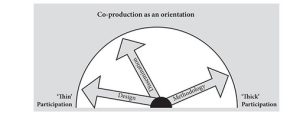
Figure 1: Continuum of Participation (p.87 Howard et al.)
Youth studies, we argue, has these tools and methods to assist policy makers. These offer resources to allow us to rethink how young people are positioned in responding to policies that impact them.
Policy Implications
Within the new UK youth strategy – Youth Matters – there is a chapter titled: Seen and Heard. This calls for involving young people in decisions that affect them as a matter of fairness, but also improved decision-making and better solutions. This includes delivering with young people by putting them ‘in the driving seat of their own lives’ (action 9) and ‘holding us to account’ (action 10) (Department for Culture, Media and Sport, 2025). We question why this policy imperative is not being put into practice through the social media ban.
A key policy implication is the precedent of social media bans and their potential global impact. Will Australia, the UK, Indonesia and France cause a domino effect whereby other nations extend social media restrictions upon young people? How will this in turn impact our post-covid globalised societies which depend upon telecommunications and digital sovereignty? And what impact will restricted online activities have for MENA and Global South countries? It would seem that social media bans produce more questions than answers.
There is an opportunity here for leading policy making processes that work with young people. Given that bans directly impact young people’s lives, this is a time for innovation and a policy making approach oriented by the UK youth strategy (Department for Culture, Media and Sport, 2025). Centring youth centred tools and approaches and taking learnings from youth studies (e.g. Howard et al, 2025) are productive ways forward for meaningfully engaging with young people in future policy making.
Conclusion
Youth-centred approaches that meaningfully bring young people into conversations about policies that impact them are critical. Growing calls from researchers and advocates are asking where young people are in the social media policy debate, with an emphasis on the need to include their ‘voices’. We have identified a need to work with young people. This means not just including young people’s ‘voices’ or inputs on pre-set consultative measures, which can be tokenistic. Those making decisions impacting on young people need timely tools to actively listen and meaningfully engage with them.
Youth studies scholarship can advance debates on UK policy – showing the strength and relevance of the field to current and emerging policies that affect young people, including by centring their voices. This is an opportunity to offer world-leading youth-centred policy.
Our argument goes beyond the current proposed social media ban and offers a case study of policy making about young people in contrast to with them. We need policy making that can meaningfully work with young people and intentionally learn from young people into the future. The question is not how do we regulate young people’s activities; the question should be: how do we work with young people to develop policy that builds their capabilities and capacities for the future.
Youth & Policy is run voluntarily on a non-profit basis. If you would like to support our work, you can donate any amount using the button below.
Last Updated: 10 September 2026
Footnotes:
[1] South Australian Premier Peter Malinauskas became a proponent of a ban, he claims, after his wife read Hadit’s book and said ‘You better effing do something about this’ https://www.abc.net.au/news/2024-10-11/social-media-summit-told-of-need-for-global-crackdown/104459420
References:
Alper, M., & Goggin, G. (2017). Digital technology and rights in the lives of children with disabilities. New Media & Society, 19(5), 726-740. https://doi.org/10.1177/1461444816686323
Austin, A., Craig, S. L., Navega, N., & McInroy, L. B. (2020). It’s my safe space: The life-saving role of the internet in the lives of transgender and gender diverse youth. International Journal of Transgender Health, 21(1), 33–44. https://doi.org/10.1080/15532739.2019.1700202
Batsleer, J. & Duggan, J. (2020). Young and Lonely. The Social Conditions of Loneliness. Policy Press.
BBC (2026). Student will ‘stare at a wall’ without social media. Accessed from: https://www.bbc.co.uk/news/videos/c5yzrp3vn8no
Brown, C., & Carr, S. (2019). Education policy and mental weakness: a response to a mental health crisis. Journal of Education Policy, 34(2), 242–266. https://doi.org/10.1080/02680939.2018.1445293
Buckingham, D., & Strandgaard Jensen, H. (2012). Beyond “Media Panics”: Reconceptualising public debates about children and media. Journal of Children and Media, 6(4), 413–429. https://doi.org/10.1080/17482798.2012.740415
Champion, K.E., Birrell, L., Smout, S., Teesson, M. and Slade, T. (2025), Debate: Social media in children and young people – time for a ban? Beyond the ban – empowering parents and schools to keep adolescents safe on social media. Child Adolescent Mental Health, 30: 411-413. https://doi.org/10.1111/camh.70032
Department for Culture, Media and Sport. (2025) Youth Matters: Your National Youth Strategy. https://www.gov.uk/government/publications/youth-matters-your-national-youth-strategy/youth-matters-your-national-youth-strategy
Department for Science and Technology. (2026a). Social media to be banned for under-16s in landmark government move to give kids their childhood back. Accessed from: https://www.gov.uk/government/news/social-media-to-be-banned-for-under-16s-in-landmark-government-move-to-givekids-their-childhood-back
Department for Science and Technology. (2026b). Growing up in the online world: a national consultation
https://www.gov.uk/government/consultations/growing-up-in-the-online-world-a-national-consultation
Dezuanni, M. Chambers, S. and Notley, T. (2026). Australian teens impacted by the social media ban are getting less news: new research. The Conversation. [Online].
Doyle, E. Kathryn, S. Warren-Perry, A. O’Brien, S. and Moore, J. (2026) Social Media Policy: perspectives from young people in Ireland. Youth & Policy. https://www.youthandpolicy.org/articles/social-media-policy-perspectives-from-young-people-in-ireland/
Eisenberg, M. E., Amadori, A., Lawrence, S. E., Eadeh, H. M., Escobar-Viera, C., Hainsworth, S., & Rider, G. N. (2025). “I’m not alone here”: A qualitative study of social media as a source of support for transgender and gender diverse youth of color. International Journal of Transgender Health, 1–13. https://doi.org/10.1080/26895269.2025.2575869
Evans, R. (2026) Support a UK ban on social media for under-16s – write to your MP. Mumsnet. https://www.mumsnet.com/news/social-media-ban-under-16s (Accessed: 20 July 2026)
Ghazarian, Z. (2025). Social media insights from sexuality and gender diverse young people during COVID-19. The Conversation. https://theconversation.com/the-under-16s-social-media-ban-will-damage-young-peoples-political-education-teachers-need-better-support-271389
Haidt, J. (2024). The anxious generation: how the great rewiring of childhood is causing an epidemic of mental illness. New York: Penguin Press.
Hanckel, B & Chandra, S (2021). Social media insights from sexuality and gender diverse young people during COVID-19. Young & Resilient Research Centre. Western Sydney University
Hanckel, B., & Hendry, N. A. (2026). Ontologies of risk in research with young people: interrogating research practices and de-centring ‘risk’ in youth digital media research. International Journal of Qualitative Studies in Education. https://doi.org/10.1080/09518398.2026.2698426
Hanckel, B., Vivienne, S., Byron, P., Robards, B. & Churchill, B. (2019). ‘That’s not necessarily for them’: LGBTIQ+ young people, social media platform affordances and identity curation. Media, Culture & Society 41 (8), 1261-1278. https://doi.org/10.1177/0163443719846612
Hope, A. (2015). Schoolchildren, governmentality and national e-safety policy discourse. Discourse: Studies in the Cultural Politics of Education, 36(3), 343–353.
Howard, F., Hanckel, B., Moore, K., Atherton, S. & Suppers, J. (2025). An introduction to youth-centred research methods. Researching with young people. Bloomsbury.
Howick, J., (2026). Why a social media ban for teenagers misses the point, The Conversation, https://theconversation.com/why-a-social-media-ban-for-teenagers-misses-the-point-279492
Keane, D. and Hayne, E. (2024). Social media driving ‘greatest destruction of human potential’ since World War II, American author tells Australian summit. ABC NEWS. https://www.abc.net.au/news/2024-10-11/social-media-summit-told-of-need-for-global-crackdown/104459420
Koram, K. (Ed.). (2019). The war on drugs and the global colour line. Pluto Books.
Mason, W. (2015). Austerity youth policy: exploring the distinctions between youth work in principle and youth work in practice. Youth & Policy, No.114. https://www.youthandpolicy.org/
Ministry of Communication and Digital Affairs. (2026) Minister of Communication and Digital Regulation Number 9 of 2026 on the protection of children in electronic systems. Republic of Indonesia. https://www.veritask.ai/en/artikel/minister-of-communication-and-digital-regulation-no-9-of-2026-requires-the-deletion-of-social-media-accounts-of-children-under-16-years-of-age
Molly Rose Foundation. (2026). More than 60% of Australian children still using social media despite ban for under-16s, research shows. https://mollyrosefoundation.org/more-than-60-of-australian-children-still-using-social-media-despite-ban-for-under-16s-research-shows/
Moore, K., Hanckel, B., Nunn, C. Atherton, S. (2021) Making Sense of Intersecting Crises: Promises, Challenges, and Possibilities of Intersectional Perspectives in Youth Research. Journal of Applied Youth Studies 4, 423–428. https://doi.org/10.1007/s43151-021-00066-0
Morales, E., Divon, T., & Lundqvist, M. (2026). Context matters: Understanding the platformization of violence. New Media & Society, 28(4), 1395-1411. https://doi.org/10.1177/14614448261420823
Nagata, J.M., Huang, O., Hur, J.O., Li, E.J., Helmer, C.K., Weinstein, E. and Moreno, M.A., 2025. Health benefits of social media use in adolescents and young adults. Current Pediatrics Reports, 13(1), p.22.
Online Safety Act 2023. https://www.legislation.gov.uk/ukpga/2023/50
Online Safety Amendment (Social Media Minimum Age) Act 2024 (Cth) No. 127. https://www.legislation.gov.au/C2024A00127/asmade
Orben, A., & Przybylski, A. K. (2019). Screens, Teens, and Psychological Well-Being: Evidence From Three Time-Use-Diary Studies. Psychological Science, 30(5), 682-696.
Orben, A., Meier, A., Dalgleish, T. et al. (2024) Mechanisms linking social media use to adolescent mental health vulnerability. Nat Rev Psychol 3, 407–423.
Parliament of Canada. (2026) Bill C-34, An Act to enact the Digital Safety Act and the Digital Safety Commission of Canada Act and to make consequential amendments to other Acts (Safe Social Media Act). 1st Sess, 45th Parl. Available at: https://www.parl.ca/DocumentViewer/en/45-1/bill/C-34/first-reading
Rasidi, P. P. (2026). Indonesia’s social media ban for under-16s deprives many children of their only public space. Indonesia at Melbourne. https://indonesiaatmelbourne.unimelb.edu.au/indonesias-social-media-ban-for-under-16s-deprives-many-children-of-their-only-public-space/
Reuters. (2026). French Parliaments Committee Approves Social Media Ban For Under 15’s. Reuters. https://www.reuters.com/legal/litigation/french-parliaments-committee-approves-social-media-ban-under-15s-2026-07-20/
Ringrose, J & Coleman, R., (2025) Should the UK follow Australia’s under-16s social media ban? It could do more harm than good, The Conversation, https://theconversation.com/should-the-uk-follow-australias-under-16s-social-media-ban-it-could-do-more-harm-than-good-269754
Room, R. (1984). Alcohol control and public health. Annual review of public health, 5(1), 293-317.
Schmidt, H. (2024). The Online Safety Act 2023. Journal of Media Law, 16(2), 202–210. https://doi.org/10.1080/17577632.2025.2459440
Selwyn, N. & Southerton, C. (2026) ‘Academics and the UK social media ban: Lessons from Australia’, BERA,
https://www.bera.ac.uk/blog/academics-and-the-uk-social-media-ban-lessons-from-australia
Setty, E., (2026) UK social media ban: tech restrictions for teens can’t be the only approach, The Conversation, https://theconversation.com/uk-social-media-ban-tech-restrictions-for-teens-cant-be-the-only-approach-285393
Social Media (Age-Restricted Users) Bill 2025 (No. 216-1). Available at: legislation.govt.nz
Storer, H. L., Nyerges, E. X., & Hamby, S. (2022). Technology “Feels Less Threatening”: The processes by which digital technologies facilitate youths’ access to services at intimate partner violence organizations. Children and youth services review, 139, 106573. https://doi.org/10.1016/j.childyouth.2022.106573
Sutcliffe, J., (2025) Moral Panic and Australia’s Under-16 Social Media Ban: A Critical Youth Work Perspective, Youth & Policy, https://www.youthandpolicy.org/articles/australias-social-media-ban/
Taylor, J. (2026). Australia’s social media ban preventing teenagers from accessing the news, research finds. The Guardian. [Online]. https://www.theguardian.com/australia-news/2026/may/19/australias-social-media-ban-preventing-teens-from-accessing-the-news-research-finds
Thomson, R., Berriman, L. and Bragg, S. (2018) Researching everyday childhoods: Time, technology and documentation in a digital age. London: Bloomsbury Academic.
Threadgold, S. (2020). Figures of youth: on the very object of Youth Studies. Journal of Youth Studies, 23(6), 686–701. https://doi.org/10.1080/13676261.2019.1636014
Turnbull, G., & Spence, J. (2011). What’s at risk? The proliferation of risk across child and youth policy in England. Journal of Youth Studies, 14(8), 939–959. https://doi.org/10.1080/13676261.2011.616489
Wang, V., & Edwards, S. (2016). Strangers are friends I haven’t met yet: a positive approach to young people’s use of social media. Journal of Youth Studies, 19(9), 1204–1219. https://doi.org/10.1080/13676261.2016.1154933
Ward, S., V. (2026) UK’s Under 16 Social Media Ban Risks Digital ID Expansion, Forbes, https://www.forbes.com/sites/digital-assets/2026/06/17/uks-under-16-social-media-ban-risks-digital-id-expansion/
Biography:
Dr. Sophie Atherton (she/her) is a sociologist at The University of Manchester. She is currently a Research Associate for the project: ‘Uncovering Hidden Inequality: Developing New Ways of Doing Death Administration’. She is interested in the sociology of youth, health, gender, sexuality, education and qualitative research methods.
Associate Professor Benjamin Hanckel (he/him) is a sociologist at the Institute for Culture and Society at Western Sydney University. His work examines health and wellbeing, social inequalities in health and social change. Hanckel’s research includes projects on digital technologies and wellbeing, youth mental health, and genders and sexualities research. He is an ARC DECRA Research Fellow, an Editor-in-Chief of the Journal of Applied Youth Studies, and Associate Editor of Health Sociology Review.
Dr Liam Berriman (he/him) is an Associate Professor in Childhood & Youth Studies at the University of Sussex. He is Director of the Centre for Innovation and Research in Childhood and Youth (CIRCY), a University of Sussex Centre of Excellence. His research focuses on children’s digital and datafied lives, with recent studies focusing on children’s voices in public sector data. He is the Co-Editor of the journal Children & Society.
Dr Karenza Moore (she/her) is Reader in Sociology at Newcastle University, UK. She has researched and published widely on alcohol/drug use, rave/dance music cultures, digital technologies, and youth leisure for over 20 years.Her most recent co-authored book (with Howard, Hanckel, Atherton and Suppers) is titled Researching with Youth: An Introduction to Youth-Centred Research (2025, Bloomsbury).
Dr Janina Suppers is a Senior Lecturer for Social Sciences in Education at Te Kura Toi Tangata, School of Education at the University of Waikato, Aotearoa New Zealand. Her research expertise includes youth studies, youth political participation, citizenship education, and youth co-research. Previously she has worked as a teacher in middle and secondary schools in Germany and Aotearoa. Janina is an Editor-in-Chief of the Journal for Applied Youth Studies.