


Article: Who is really participating? Reflections on screening for authenticity in youth crisis mental health research

In an era of growing generative AI, research studies with incentives for participants are being infiltrated and exploited. Related guidance has not yet caught up. In this article, Bayliff et al. discuss the tensions in balancing inclusive participatory processes with maintaining data quality and research integrity.
As researchers working on a NIHR-funded study about youth mental health crisis services, we encountered concerns with participant authenticity during recruitment. These reflections draw on our experiences of balancing inclusive participation whilst maintaining data quality and research integrity. The reflections presented in this paper emerged through ongoing supervision with the Chief Investigator, collaborative discussions within the research team, and consultation with wider research networks. Drawing on contemporary experiences of conducting NHS and community-based research, the paper offers timely insights into the challenges of maintaining data quality and research integrity. While concerns about inauthentic participation are well established, their growing prominence within online and incentivised research has intensified the need to better understand and address this issue. This paper has been led by the research assistants working on the project to share learning with the research community about this important issue.
Background
In 2024-2025, 1 in 10 children were referred to Child and Adolescent Mental Health Services (CAMHS), including 60,889 referrals for mental health crises (Children’s Commissioner for England, 2026). The high number of referrals has increased the demand on CAMHS, with services trying to find new ways to support children and young people. The Care Responders study (Parry et al., 2026) explores how first responders (e.g., police, paramedics, mental health practitioners) can best support young people experiencing a mental health crisis. The study explores young people’s and families’ experiences of different types of responses, whether support comes from health services alone or from joint teams working together, to ultimately understand ‘what works’.
In the context of the escalating demand for children’s mental health services, particularly in crisis settings, research with children and young people (CYP) and their families, plays a critical role in informing future service design and policy (Sartor, 2023). The Care Responders study engaged CYP and families through data collection and patient and public involvement and engagement. Capturing lived experience voices through multiple methods can ensure service redesign is responsive and meaningful to those it seeks to support. Therefore, participation from CYP and families was a central priority.
In line with the National Institute for Health and Care Research (NIHR) guidelines, it is common practice to compensate participants for their time. Monetary incentives can help reduce barriers to engagement, recognise the time and expertise participants contribute, and support the inclusion of groups who may be underrepresented (Różyńska, 2022). However, incentivised research, particularly when recruited and conducted online, has developed new challenges in mental health research (Mistry et al., 2026). One increasingly common challenge is the growing number of inauthentic participants; individuals who misrepresent their eligibility or experiences to gain incentives from the research study (Ching et al. 2026).
Potentially inauthentic responses present challenges related to participant screening, sample validity, and data quality. Where data are falsified or generated without authentic engagement, the trustworthiness of research findings can be compromised (Lough Dennell et al., 2025). There is a risk that conclusions drawn from these data may not be truly reflective of young people’s experience with mental health crisis. Within CYP mental health research, inauthentic data risks influencing service provisions, policy development, and resources. Poor data integrity may therefore contribute to the design of services that do not meet the needs of CYP, families, and professionals (Quinn et al., 2026).
Expanding Participation and Encountering New Challenges
Participants were initially recruited through National Health Service (NHS) Trusts acting as Participant Identification Centres for the study, along with voluntary, community, faith, and social enterprise (VCFSE) organisations. While this approach supported recruitment of eligible participants who had direct experience of mental health crisis services, there was recognition that relying solely on these sites could risk limiting the diversity of voices represented in research. To broaden participation and improve inclusivity, recruitment was expanded to online forums, mailing lists, and other digital communication channels. Online recruitment can reach individuals who may be less visible through traditional clinical pathways, thereby supporting more inclusive participation.
However, while broadening recruitment increased accessibility, it also introduced new challenges. The research team experienced a substantial increase in survey submissions and direct expressions of interest from individuals wishing to participate. Alongside genuine enquiries, a growing number of responses began to raise concerns regarding their authenticity. This included potential participants providing detailed descriptions about how they met the study’s criteria which shared many similarities in language and structure.
Screening procedures were reviewed through weekly meetings with the Chief Investigator, consultation with the wider research team, and peer support networks, ensuring that emerging patterns of inauthentic participants were considered with appropriate oversight. Advice was also gathered from other NIHR-funded researchers and our Independent Oversight Committee, recognising this as a growing and shared challenge across mental health research. The approach was informed by an established University of Manchester protocol (University of Manchester, 2026), which provided a foundation for addressing this issue and for ongoing refinement of screening procedures as recruitment progressed.
Recognising Potential Inauthentic Participants
Inauthentic submissions typically came in large batches within a few days; the emails appeared polished and closely mirrored the wording used in recruitment materials. For example:
‘I am under 20 years old. I live in the UK. I have experienced a mental health crisis in the last 2 years. I would like to participate in a research interview.’
Email addresses typically consisted of generic names combined with a string of numbers and were often associated with Gmail accounts, e.g. ‘Thomasjones36294@gmail.com’. Although none of these characteristics alone indicate inauthentic participation, the repeated occurrence of similar patterns raised concerns across the team.
It became apparent that Artificial Intelligence (AI) may have been used to generate convincing, yet fabricated, experiences and personal characteristics to share with the research team. AI tools, such as large language models, can be used to create realistic participant narratives and tailor responses to meet the recruitment criteria (Gibson & Beattie, 2024). Emails from potential participants appeared to be almost identical in content and format, indicating they might have inputted the study’s information into an AI Chat bot.
Participant Screening Procedures
For those who emailed asking to participate through a qualitative interview, additional information was requested to initially assess eligibility. This included their age, specific location, and whether they were a CYP, parent or caregiver. Reviewing these responses and initial eligibility checks required 10 minutes per enquiry. For participants who accessed and completed the online survey, responses were automatically screened to identify potentially inauthentic entries e.g. duplicate submissions, automated responses, or substantially incomplete submissions.
The research team organised a 10-minute video screening check with potentially inauthentic participants. Two researchers explored participants’ experiences and assessed consistency with previous responses through follow-up questions, worded slightly differently. For example, asking which city they live in, the borough, and the first 3 digits of their postcode, all of which is collected via the survey and/or interview. Most individuals would turn their camera and microphone on and off throughout the call, asking to hear questions multiple times. This occasionally raised concerns that some participants may be relying on external sources to formulate responses, including potentially generative AI tools. These concerns were heightened by long pauses followed by summaries of their experience that appeared rehearsed or scripted.
Researchers discussed cases before determining eligibility. Decision-making and documentation typically required a further 15 minutes per participant, meaning each potentially inauthentic participant required 30 minutes or more of researcher time. Decisions were communicated sensitively to participants, with considerations of ethical and safeguarding responsibilities. Ongoing requests to join the study’s advisory groups also made careful screening essential to safeguard existing members (Ziminski & Liddell-Quintyn, 2025). In some cases, individuals who had been informed that they were not eligible to participate continued to contact the research team requesting a voucher.
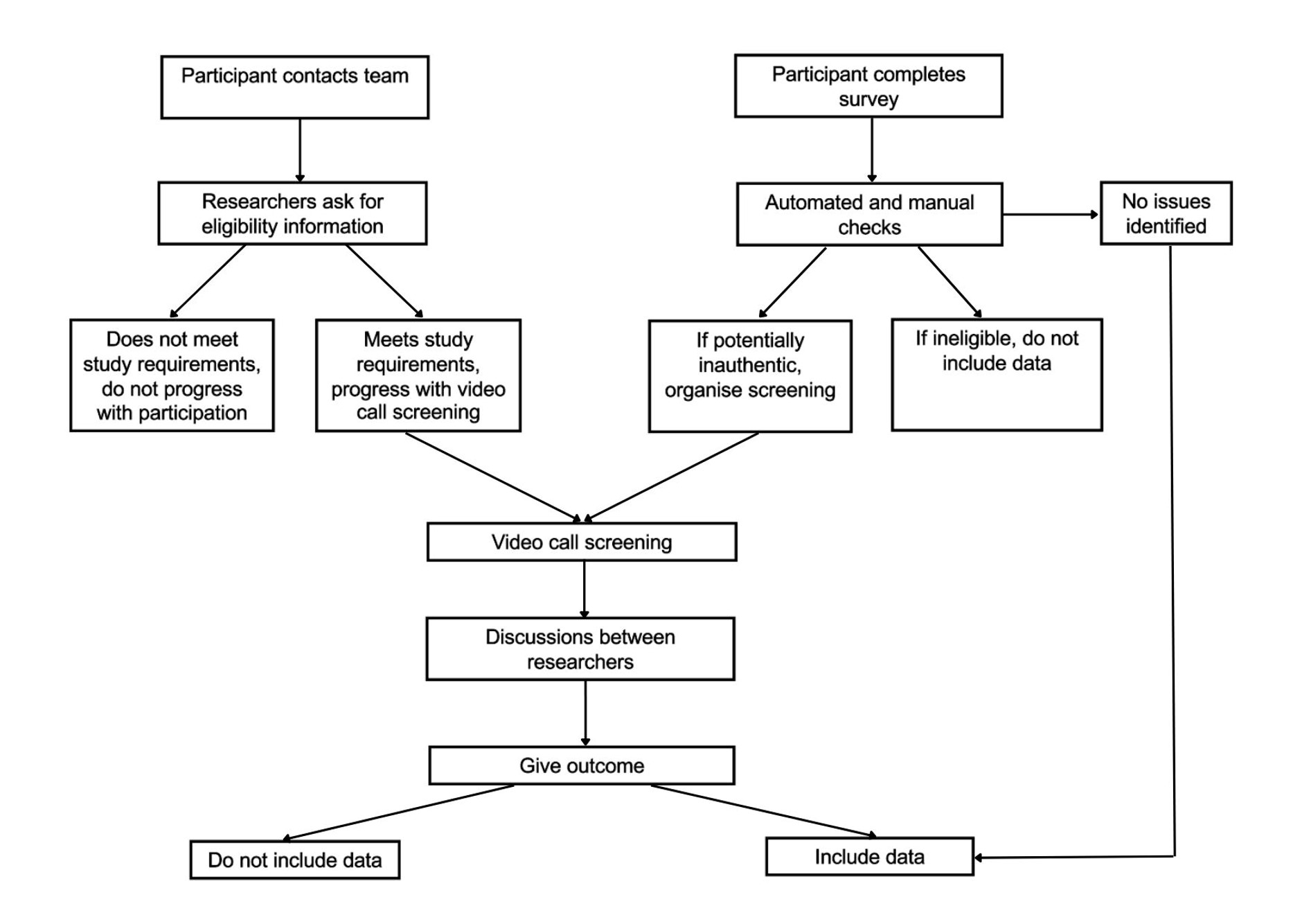
Figure 1 – Participant recruitment and screening process
Ethical Considerations and Researcher Reflections
Introducing additional screening procedures raised several ethical concerns. For example, the research team sought to balance protecting data quality and participant safety whilst maintaining an inclusive approach to participation. Screening participants was necessary to identify potential inauthentic responses, however, there was an ongoing concern that genuine participants could be unintentionally excluded. If there remained doubt related to eligibility, participants were included in the study as to minimise removing potentially authentic responses, in line with NIHR guidance.
Determining what constitutes a ‘genuine’ participant in an era of increasing AI use presents additional challenges for research teams. Well-structured and polished responses could not be solely used to indicate inauthentic participation as many participants may use AI-assisted tools to improve grammar or confidence when communicating with researchers. Equally, vague responses may reflect difficulties when communicating sensitive experiences rather than ineligibility. Therefore, there was a risk that being too restrictive during the screening process could disproportionately exclude the groups that youth mental health research seeks to engage (Lough Dennell et al., 2025).
Discussion
There is an increasing issue with inauthentic responses in youth mental health research, which poses a risk to data integrity (Ching et al., 2026). This paper has reflected on research team’s experiences of managing the challenges that arise from digital recruitment within the Care Responders study. While online recruitment methods can increase accessibility for young people to share their experiences, it increases the risk of inauthentic participation.
Our reflections highlight the growing complexities associated with digital recruitment and the use of AI within contemporary research (Lough Dennell et al., 2025; Williams & Ingleby, 2025). One important reflection was that identifying potentially inauthentic participants is rarely linear. Indicators such as generic email addresses, highly polished responses, or inconsistencies across communications may raise concerns, however, they cannot be definitive evidence of inauthenticity. Screening procedures should therefore be proportionate and informed by multiple sources (Sudina et al., 2025).
The tensions highlighted in this paper have implications for research, policy, and practice. Research evidence plays an important role in developing and commissioning services and influencing policy priorities regarding youth mental health. If inauthentic participants remain undetected, future evidence-based interventions are at risk of not being feasible to supporting young people’s mental health. Conversely, stringent screening procedures may result in the exclusion of genuine participants whose experiences are already underrepresented within research, thus limiting the diversity of voices that inform youth mental health practice and policy. Several recommendations have been developed from this paper’s reflections:
Recommendations and Implications
-
Protecting the representation of young people’s experiences
In contexts where research informs service development, commissioning, or policy, compromised datasets may contribute to interventions that fail to reflect the needs of the populations they intend to support. Efforts to strengthen participant authenticity should therefore be viewed as not only a methodological consideration, but also as an ethical responsibility to ensure that young people’s voices are represented as accurately as possible. This can be supported through a combination of automated manual screening procedures designed to identify similarities between participants, detect response inconsistencies, and flag potentially inauthentic submissions.
-
Researcher wellbeing and resource allocation
Participant screening can be time consuming and place considerable demands on researchers, particularly when making decisions about participant authenticity. Adequate time and resources should therefore be allocated to screening and administrative activities, supported by clear record-keeping, supervision, peer discussion, and senior consultation. A team-based approach can help distribute workload, promote consistent decision making, and support researcher wellbeing.
-
Participant wellbeing
Approaches to authenticity must remain attentive to participant wellbeing. As young people may use digital tools to communicate their experiences, indicators of possible inauthenticity, such as text written by generative AI tools, should prompt further by tentative exploration, rather than presuming automatic grounds for exclusion. Future research may benefit from multidisciplinary collaboration involving researchers, lived-experience contributors, digital specialists, and governance bodies to ensure participant wellbeing and data integrity remain aligned.
-
Evidence-informed policy and practice
Researchers and practitioners should recognise that concerns regarding participant authenticity have consequences beyond data quality alone. Findings derived from inauthentic experiences may influence understandings of young people’s needs, perceptions of service effectiveness, and decisions regarding the allocation of limited resources. Transparency enables practitioners and policymakers to make more informed judgements about the strength and applicability of research findings for future service development.
Conclusion
Potentially inauthentic responses present challenges for recruitment, data quality, and the credibility of study findings. Reflections from the Care Responders study highlight that identifying and managing potentially inauthentic responses is often a complex, time-intensive and frustrating process. The emergence of generative AI has introduced new challenges for researchers that are not yet adequately addressed by existing guidance. As digital recruitment expands, there is a growing need for practical recommendations and shared reflections of concerns relating to participant authenticity. Although these processes can be resource intensive, greater discussion and shared learning are essential to protect data integrity and ensure that research, policy, and practice are informed by the authentic experiences of young people and families.
Youth & Policy is run voluntarily on a non-profit basis. If you would like to support our work, you can donate any amount using the button below.
Last Updated: 12 October 2026
Footnotes:
NIHR HS&DR NIHR158509. The views expressed are those of the authors and not necessarily those of the NIHR or the Department of Health and Social Care.
References:
Children’s Commissioner for England. (2026). Children’s and young people’s mental health services: 2024–25. https://assets.childrenscommissioner.gov.uk/wpuploads/2026/06/Childrens-Mental-Health-Annual-Briefing-24-25.pdf
Ching, B. C., Ani, C., Pitt, A., Eager, S., Simonoff, E., & Downs, J. (2026). Editorial perspective: A call for action on imposter participants in child and adolescent mental health research. Child and Adolescent Mental Health, 31(2), 149–152 https://doi.org/10.1111/camh.70041
Gibson, A. F., & Beattie, A. (2024). More or less than human? Evaluating the role of AI-as-participant in online qualitative research. Qualitative Research in Psychology, 21(2), 175–199. https://doi.org/10.1080/14780887.2024.2311427
Lough Dennell, B. L., Dowrick, A., Evered, J. A., & Jones, A. (2025). Do you know who you’re talking to? Methodological reflections on maintaining inclusivity and research integrity when responding to inauthentic encounters in online qualitative research. International Journal of Qualitative Methods, 24, 1–10. https://doi.org/10.1177/16094069251384112
Mistry, K., Merrick, S., Cabecinha, M., Daniels, S., Ragan, J., Epstein, M., … & Levell, N. J. (2026). Fraudulent participation in online qualitative studies: practical recommendations on an emerging phenomenon. Qualitative Health Research, 36(7), 647-657. https://doi.org/10.1177/10497323241288181
Parry, S., Eve, Z., Brown, H., Lobban, F., Chitsabesan, P., Robinson, D., … & Wong, G. (2026). Evaluating the implementation of a mental health joint response with young people and families: protocol for the care responders study, a realist and health economic evaluation. Frontiers in Health Services, 6, 1846383. https://doi.org/10.3389/frhs.2026.1846383
Pellicano, E., Adams, D., Crane, L., Hollingue, C., Allen, C., Almendinger, K., Botha, M., Haar, T., Kapp, S. K., & Wheeley, E. (2024). Letter to the Editor: A possible threat to data integrity for online qualitative autism research. Autism, 28(3), 786-792.https://doi.org/10.1177/13623613231174543
Quinn, S., Richards, N., Williams, J., Mogan, C., Myall, M., Lloyd-Williams, M., & Calman, L. (2026). Navigating the rise of artificial intelligence and imposter participants in qualitative health research. International Journal of Qualitative Methods, 25, https://doi.org/10.1177/16094069261431990
Różyńska, J. (2022). The ethical anatomy of payment for research participants. Medicine, Health Care and Philosophy. 25. 449-464 https://doi.org/10.1007/s11019-022-10092-1
Sartor, C. (2023). Mental health and lived experience: The value of lived experience expertise in global mental health. Cambridge Prisms: Global Mental Health, 10, e38. https://doi.org/10.1017/gmh.2023.24
Sudina, E., Jia, R., Kang, E., Plonsky, L., & Yaw, K. (2025). Can you trust your participants? How not to get scammed when recruiting online. Research Methods in Applied Linguistics, 4(3), 100285. https://doi.org/10.1016/j.rmal.2025.100285
University of Manchester, Research Governance and Integrity. (2026). Guidance on the exclusion of inauthentic participants in research projects. The University of Manchester. https://documents.manchester.ac.uk/display.aspx?DocID=75231
Williams, R. T., & Ingleby, E. (2025). The online survey in qualitative research: can AI act as a probing tool?. Frontiers in research metrics and analytics, 10, 1519008. https://doi.org/10.3389/frma.2025.1519008
Ziminski D, Liddell-Quintyn E. (2025) Preventing and mitigating fraudulent research participants in online qualitative violence and injury prevention research. BMJ Open Quality ;14:003706. https://doi.org/10.1136/bmjoq-2025-003706
Biography:
Arron Deacon and Rachel Bayliff are Senior Clinical Research Assistants; Dr Zarah Eve and Dr Annabel McAreavey are postdoctoral researchers and lecturers in psychology; and Dr Sarah Parry is a Clinical Psychologist and Academic Lead for the Clinical Psychology Doctorate. Together, they work on research focused on young people’s mental health, crisis responses, and service improvement, aiming to inform policy and practice through applied research.